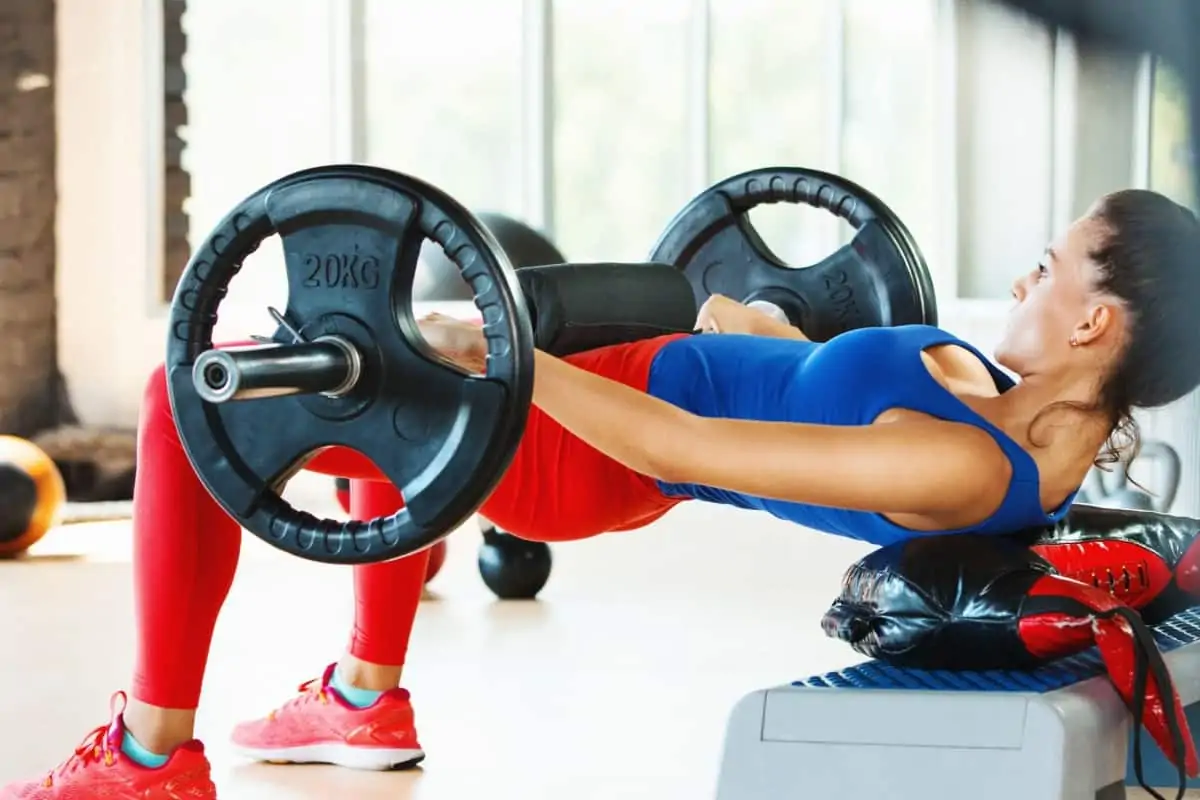
Enhance flexibility and well-being with these essential yoga stretches. Add these exercises to your daily routine for improved flexibility and overall health.
Improving body flexibility comes with many advantages and has a positive influence on your health. If you’re serious about it, you can do certain exercises regularly to achieve the maximum effect. Ideally, you will have to stretch for about 10-20 minutes every 2 days to get noticeable results.
Hiit Workout suggests that you improve your flexibility with yoga stretches and different stretching exercises. You can do these exercises separately or include them in your regular workout schedule. Don’t forget to perform a small warm-up before you do these exercises.
Standing backbend (Anuvittasana)
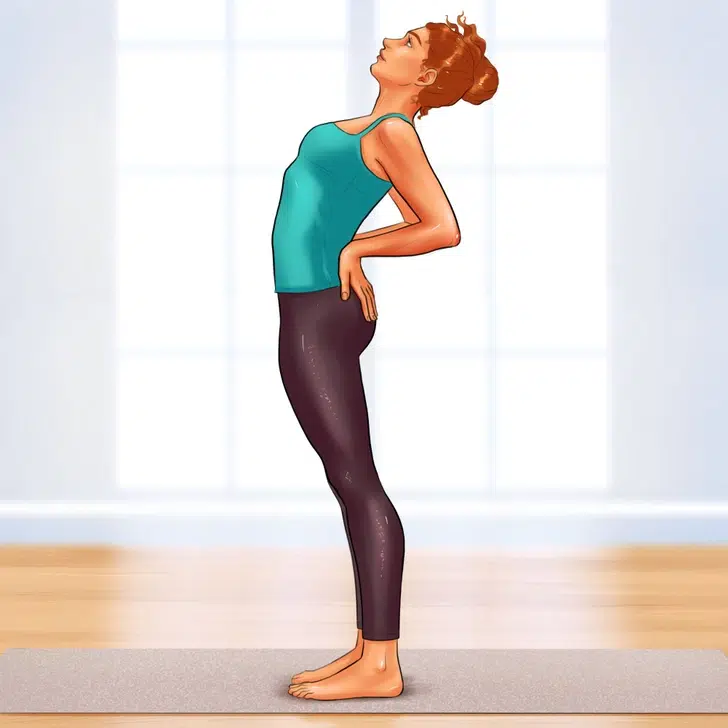
The muscles that go to work: abs, chest muscles, back, and lower back
How to do it:
- Stand straight with your legs together.
- Place your hands on the lower back. Slowly bend back as much as your body allows you to. Don’t let your head drop, and control your entire body. Look ahead. To make it harder, you can stretch your hands above your head and bend back together with them.
⏱ Hold the position for 1 minute.
Intense side stretch (Parsvottanasana)
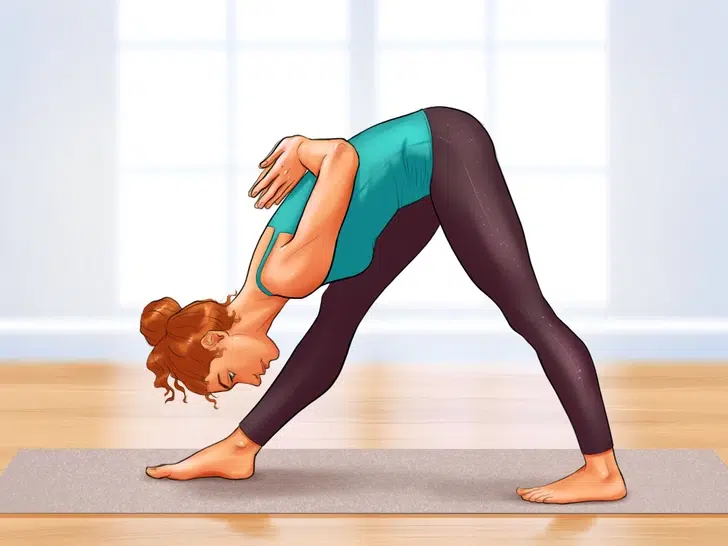
The muscles that go to work: pelvic muscles, quads, and hamstrings
How to do it:
- Stand straight with your legs just wider than your shoulders. Put your hands behind your back, palms together. If it’s hard for you to do, hug your forearms with your hands on the elbows. Beginners can just put their hands down on the floor.
- Turn your torso and your feet to the right. Bend to the leg that’s forward. Your chest should be on the hip. Look down. If it’s hard to keep your hands behind your back, put them forward and place them next to the foot.
- Repeat the bend with the other leg.
⏱ Hold the position for 30 seconds on each side.
Revolved triangle pose (Parivrtta Trikonasana)
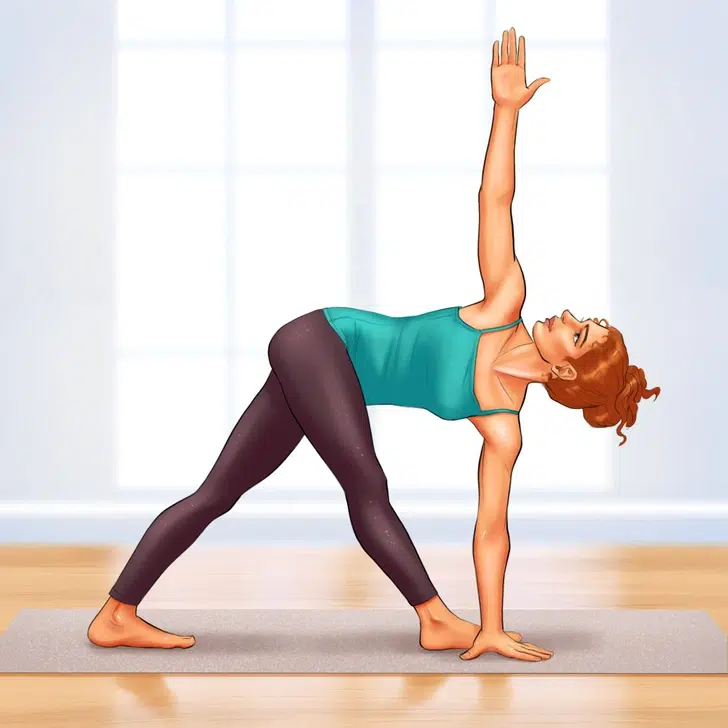
The muscles that go to work: the latissimus dorsi, glutes, hamstrings, and quads
How to do it:
- Stand straight with your legs wider than your shoulders, arms to the sides.
- Try to reach your right foot with your left hand. Put this hand behind the foot. Put your right hand up, looking at the palm. The left foot should be turned inside.
- Repeat with the other side.
⏱ Hold the position for 1 minute on each side.
Downward-facing dog (Adho Mukha Svanasana)
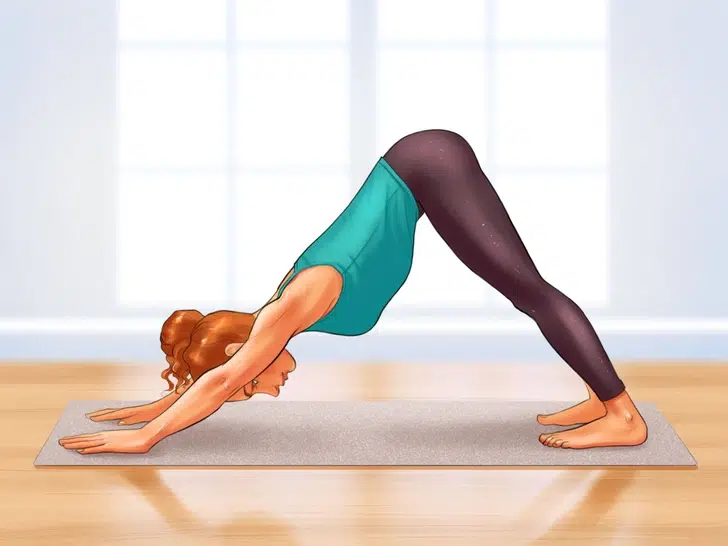
The muscles that go to work: glutes, deltoids, hamstrings, triceps, and quads
How to do it:
- Make a plank on straight arms. Press into your hands and your toes.
- Slowly put the heels on the floor and pull the buttocks to the ceiling and the chest to the floor. Look down — your neck should be relaxed. Feel the hamstrings stretch and the back muscles work. If it’s hard for you, you can bend the knees a little.
⏱ Hold the position for 1 minute.
Seated head-to-knee (Janu Sirsasana)
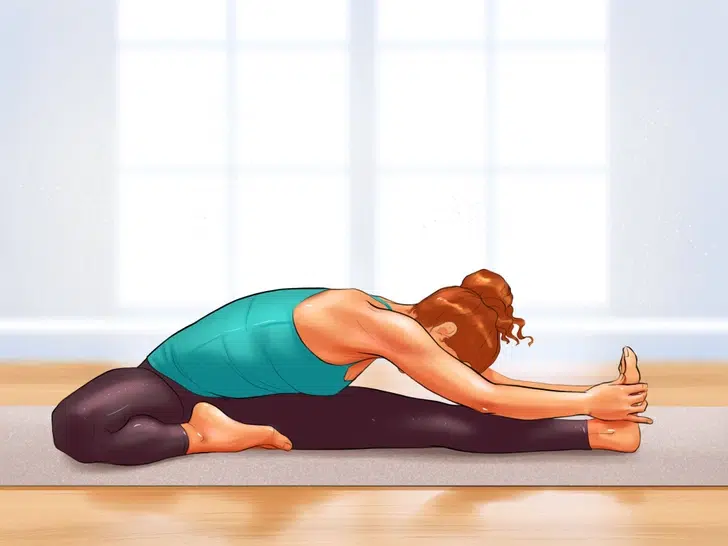
The muscles that go to work: back muscles, the back of the hips, and hip joints
How to do it:
- Sit up straight. Put one leg forward and pull the other one to yourself.
- Bend your entire body to the forward leg. Hold the foot with your hands. If you can, put your palms on the ankle. Look at the floor and feel your back stretch.
- Do the same thing with the other leg.
⏱ Hold the position for 1 minute on each side.
Revolved head-to-knee (Parivrtta Janu Sirsasana)
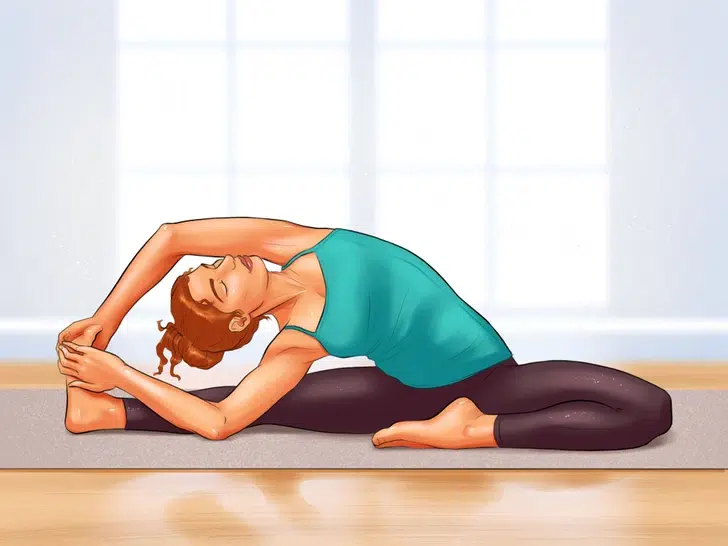
The muscles that go to work: back, hips, hip joints, and the abdominal external oblique muscle
How to do it:
- Sit on the mat. Pull one leg to yourself and take the other one as far from yourself as you can with the foot facing you.
- Put your hands up and bend toward the straight leg. Grab your foot. Your chest should be completely open. Look at the ceiling. You should feel a slight stretch in the muscles.
- Repeat the exercise with the other leg.
⏱ Hold the position for 1 minute on each side.
Half lord of the fishes (Ardha Matsyendrasana)
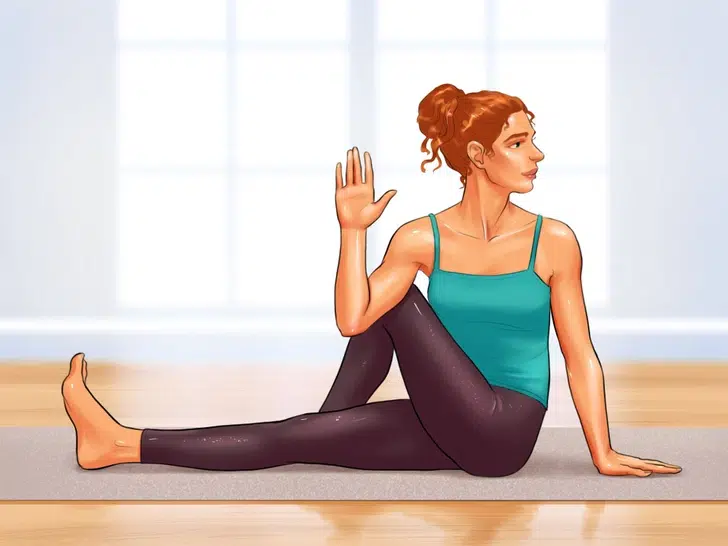
The muscles that go to work: core muscles, shoulders, back, and hips
How to do it:
- Sit up straight. Put your legs in front of you.
- Bend the left leg to yourself and place its foot behind the right hip. Turn the torso and the head to the left. Place the right elbow in front of the left knee and put the palm up. The left hand should be on the floor. Hold the position.
- Repeat with the other leg.
⏱ Hold the position for 1 minute on each side.
Bow pose (Dhanurasana)
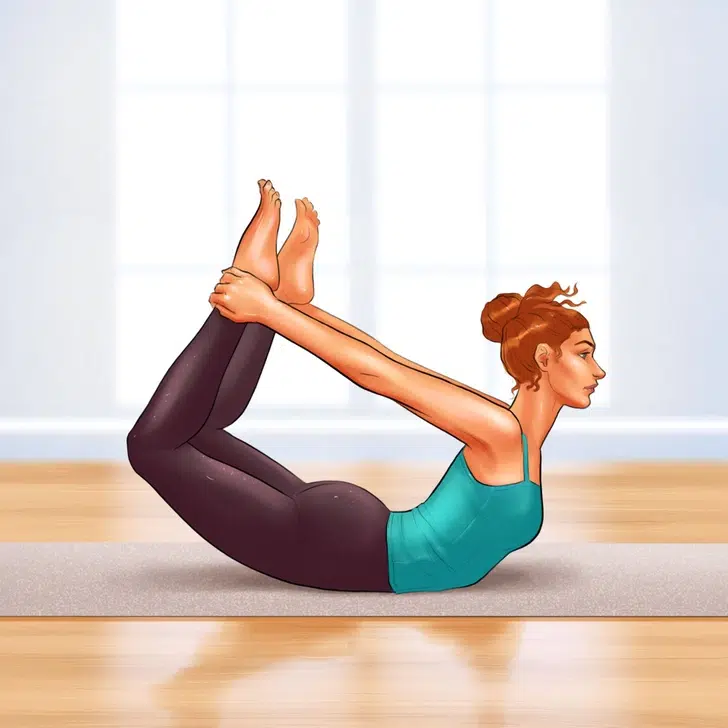
The muscles that go to work: core muscles, back, chest, glutes, and legs
How to do it:
- Lie on the floor. Bend the legs to the glutes and grab the ankles.
- Lift the knees and the shoulders off the floor. Reach up as much as you can. Don’t overdo it — you should feel comfortable. Look ahead of you, and don’t drop your head back.
⏱ Hold the position for 30 seconds.
Downward-facing frog (Adho Mukha Mandukasana)
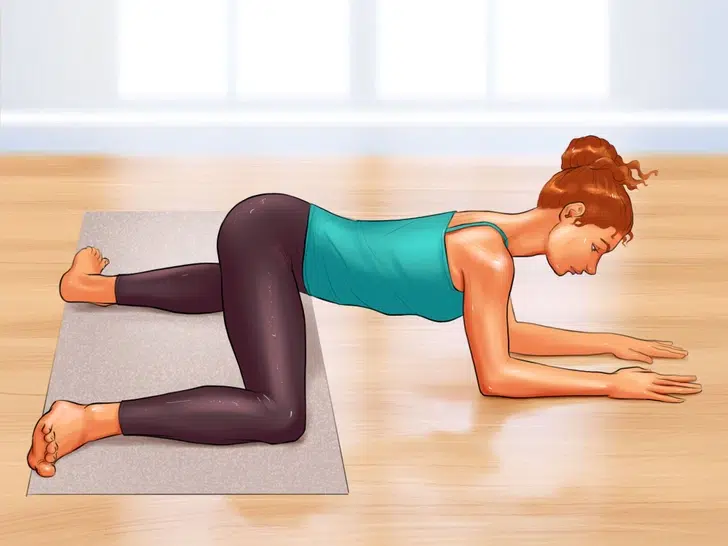
The muscles that go to work: hip joints, the inside of the hips, and lower back
How to do it:
- Stand on all fours.
- Pull the legs to the sides. Go down as deep as you can. You should feel a pleasant stretch in the muscles, not pain. Bend the lower back. Look at the floor.
⏱ Hold the position for 1 minute.
Belly twist (Jathara Parivartanasana)
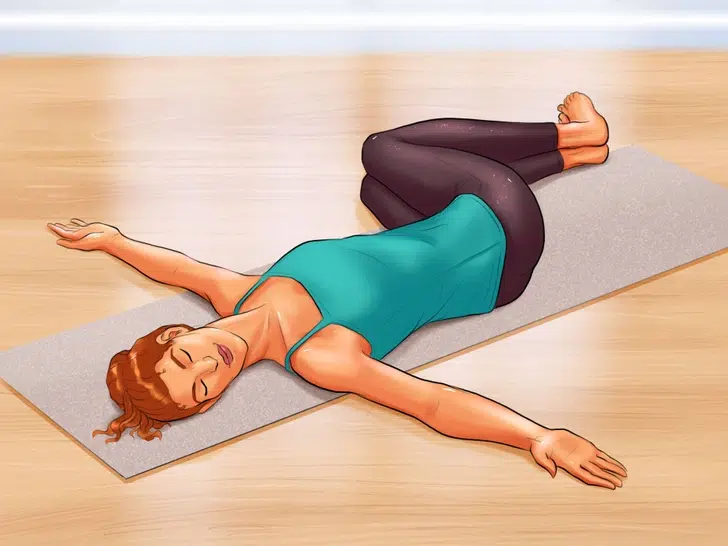
The muscles that go to work: rectus abdominis muscle, trapezius, and chest
How to do it:
- Lie on your back. Pull the legs to yourself. Lift the feet making a right angle between the shins and the hips. Take the arms to the sides.
- Put the knees to the left. If it’s hard for you to keep them on the floor, place your left palm on the top. The shoulders should be on the floor. Turn your head to the right. To make it harder, straighten out the knees.
- Do the same thing on the other side.
⏱ Hold the position for 3 minutes on each side.
Keep reading: 90 90 stretch, effective exercise to improve hip, back strength and flexibility